Introduction
If you’re thinking about selling an NDIS business or buying one, the first thing you’ll hear people talk about is the change of ownership process. And honestly? That phrase alone scares a lot of people.
It sounds complicated, slow, and full of paperwork. But the truth is, once you understand how it works, it’s not as bad as it looks.
This guide is written for real people — business owners, buyers, and anyone searching for an NDIS business for sale in Australia. No legal jargon. No fancy words. Just clear answers, like I’m explaining it to my neighbour over a coffee.
The change of ownership process for NDIS is different from selling a normal café or retail shop. You’re not just selling a business. You’re dealing with participants, staff, compliance rules, and the NDIS Commission. That’s why many deals fail — not because the business is bad, but because the process isn’t handled the right way.
Quick heads-up: In this article we’ll cover whether you can sell the business outright or if you need to transfer NDIS provider registration — plus the stuff people forget (like transferring insurance when selling NDIS business Australia).
What Does the Change of Ownership Process for NDIS Really Mean?
When people hear the words change of ownership process, most of them think it means selling everything, handing over the keys, and walking away. That might be true for normal businesses, but with an NDIS business, things work a bit differently.
In simple terms, the change of ownership process for NDIS is how control of an NDIS business moves from one owner to another while staying compliant with NDIS rules. It’s not just about money changing hands. It’s about making sure participants stay supported, staff stay employed, and services continue without disruption.
Here’s the part many owners don’t realise: You’re not “selling the NDIS registration” like you’d sell furniture or equipment. The NDIS Commission doesn’t allow registrations to be freely traded. That’s why the structure of the deal matters so much when selling NDIS business.
What this process protects
- Participants (no sudden service drops)
- Staff (clear handover and stability)
- Buyers and sellers (less risk and fewer surprises)
Why deals fail (usually)
- Wrong deal structure chosen too late
- Messy documents and unclear handover
- Insurance gaps and poor communication
Can You Sell an NDIS Business or Do You Need to Transfer the NDIS Provider?
This is one of the most common questions I hear from owners who want to sell NDIS business: “Can I just sell it like any other business, or do I need to transfer the NDIS provider?”
The short answer? Yes, you can sell an NDIS business, but how you sell it matters a lot. Unlike normal businesses for sale, an NDIS business is tied to strict rules. The NDIS Commission wants to make sure participants are protected at all times.
Selling NDIS Business vs Selling the Company
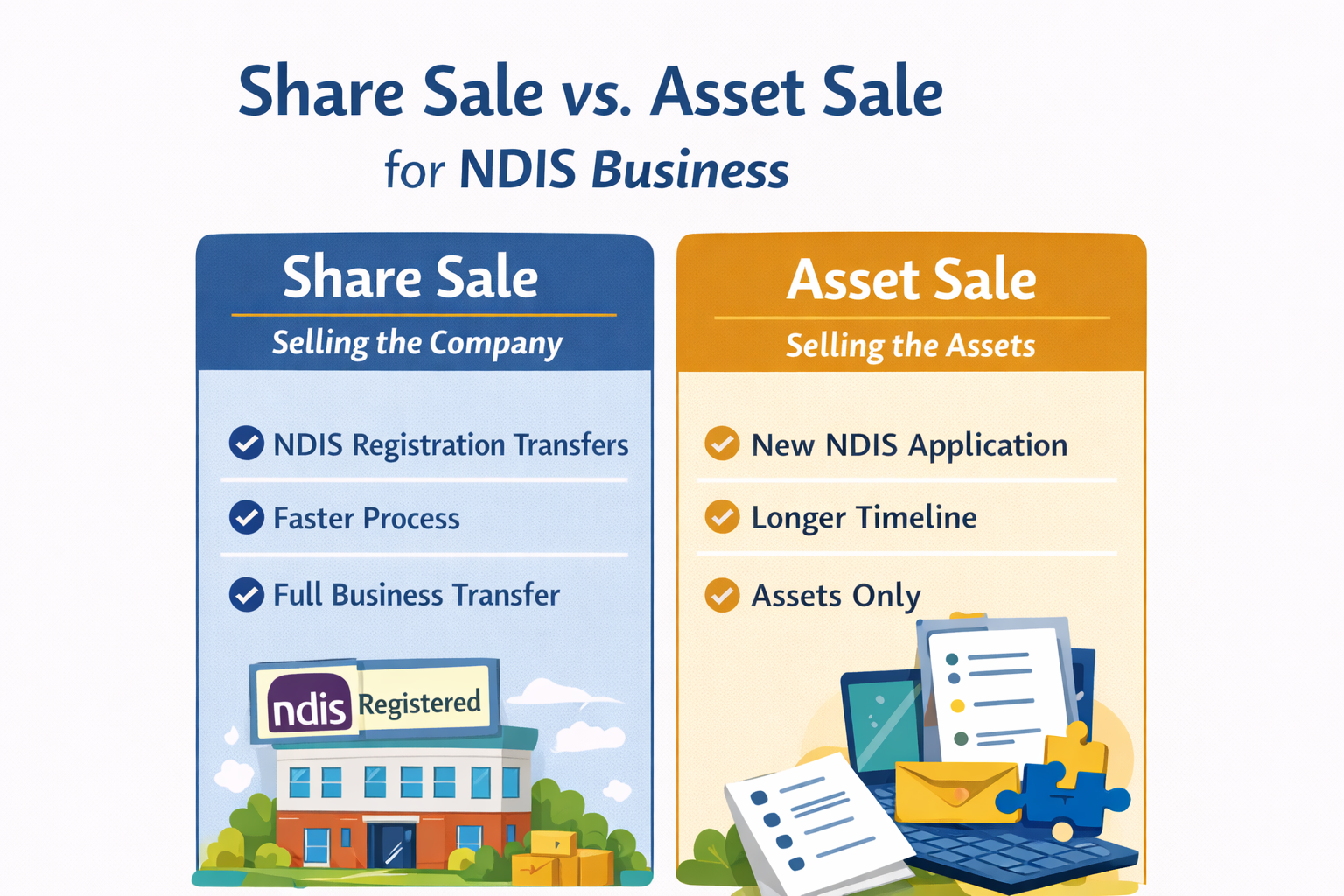
Some owners sell the company itself (often called a share sale). In this case, the legal entity stays the same. The NDIS provider registration stays active. Only the ownership of the company changes. This is often the fastest option and very popular when buyers want ongoing cash flow without interruption.
When You Need to Transfer NDIS Provider Registration
Other owners sell the business assets only. This includes things like participant agreements, brand name, systems, and goodwill. In this situation, the buyer applies to become an NDIS provider separately and may need to transfer NDIS provider status (or register as a new provider). This path takes longer, but sometimes it’s cleaner, especially if the seller wants a full exit.
Quick comparison (simple view):
| Deal type | What changes | Typical outcome |
|---|---|---|
| Share sale | Company owner changes | Registration usually stays with the same entity |
| Asset sale | Business assets move to buyer | Buyer often needs fresh registration / approval steps |
Another big factor is insurance. When selling assets, policies usually don’t transfer automatically. This is where transferring insurance when selling NDIS business Australia becomes a serious issue. Miss this step, and both buyer and seller could be exposed to risk.
Buyers looking for an NDIS business for sale should always ask one question early: “Am I buying the company or just the business?” That single question changes the whole deal.
Step-by-Step Change of Ownership Process for NDIS Businesses
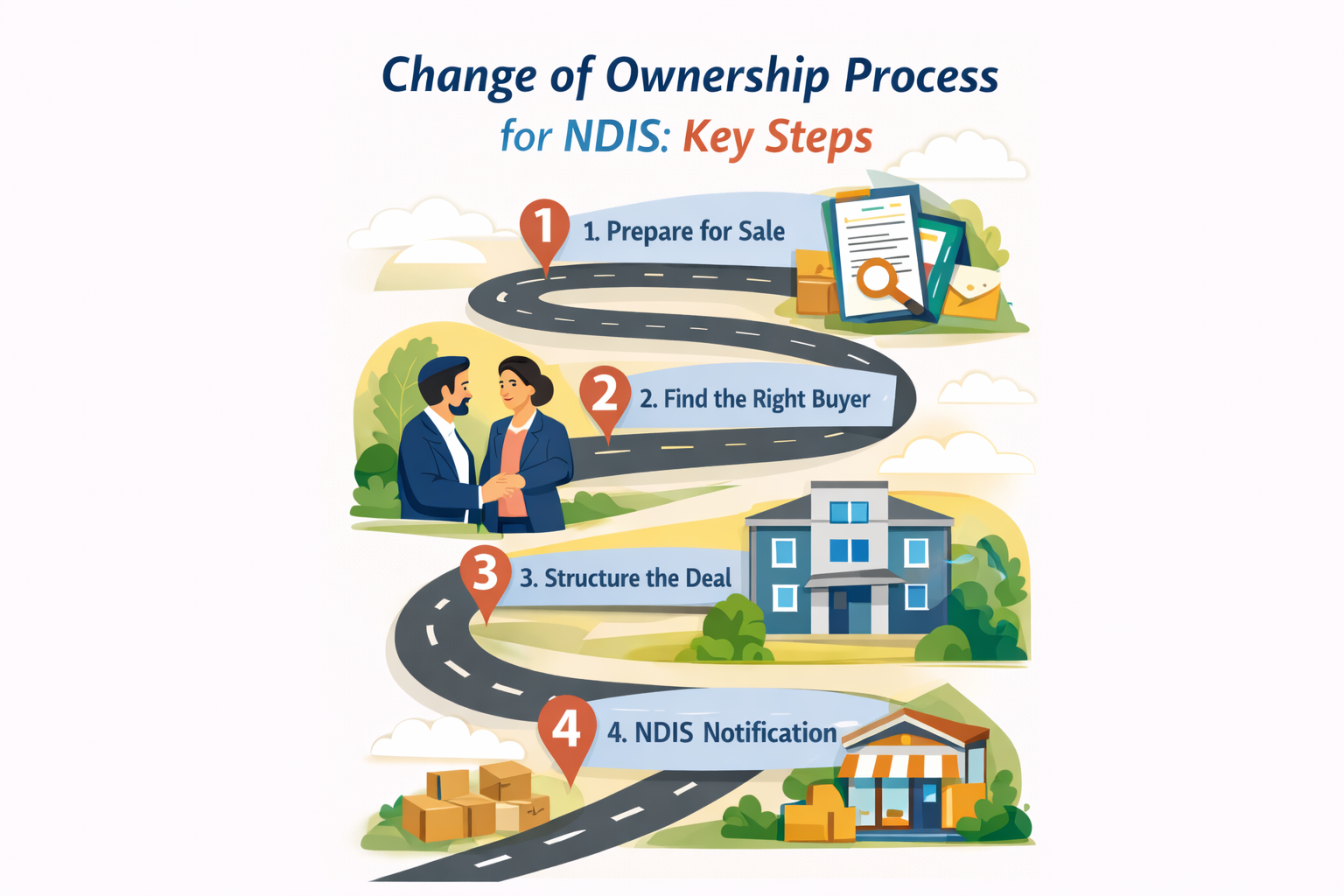
Now that you know how an NDIS business can be sold, let’s talk about what actually happens next. Whether you’re selling NDIS business or buying one, the process usually follows the same core steps.
Step 1 – Preparing for Selling Your NDIS Practice
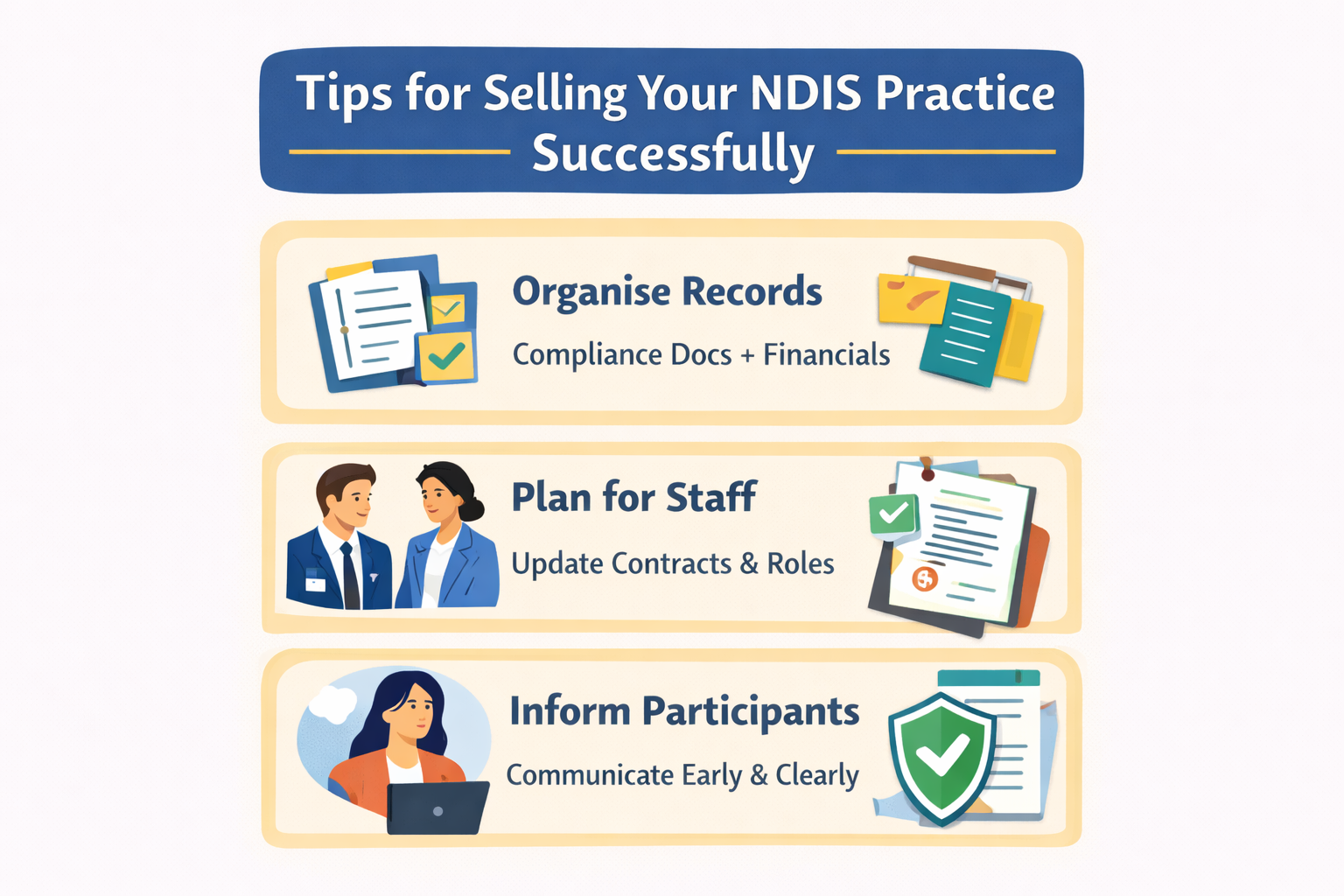
Before you even list your business, you need to get it ready. If you’re selling your NDIS practice, buyers will look closely at compliance history, active participants, staff contracts, insurance, and clean financials.
Step 2 – Finding the Right Buyer for Your NDIS Business for Sale
Not every buyer is a good buyer. Serious buyers understand compliance, participant care, and long-term responsibility. If you’re listing an NDIS business for sale, filtering buyers early saves time and stress.
Step 3 – Agreements and Deal Structure
Once a buyer is found, both sides agree on whether it’s a share sale or asset sale. This decision impacts timelines, approvals, and insurance. This is where the change of ownership process officially begins.
Step 4 – NDIS Notification and Compliance Checks
In many cases, the NDIS Commission must be notified of ownership changes. They may request documents or confirm that standards are still met.
Step 5 – Settlement and Handover
After approvals, settlement happens. Staff are informed, participants continue receiving care, and systems are handed over. If planned properly, this feels smooth — not scary.
Key idea: The change of ownership process isn’t about speed. It’s about doing it right.
Selling Your NDIS Practice – What Most Owners Forget
When people think about selling your NDIS practice, they usually focus on price. But price is not what kills most deals. What usually causes problems are the small things owners forget — the boring stuff that doesn’t sound important until it suddenly is.
One big mistake owners make when selling NDIS business is assuming the buyer will “figure things out later.” Buyers want clarity. They want to know exactly what they’re taking over and how smooth the handover will be.
People (staff + participants)
- Will staff stay on after settlement?
- Are contracts up to date?
- How will participants be informed?
Systems + records
- Rosters, software, compliance files
- Incident reports and reportable events
- Clear handover plan and support period
Insurance is another big one. Many sellers don’t realise that policies don’t always move with the business. This is why transferring insurance when selling NDIS business Australia must be discussed early.
Then there’s communication. NDIS deals fall apart when staff or participants hear about the sale the wrong way — or too late. A simple, calm communication plan builds trust and protects the business value.
Mindset shift: You’re not just selling income. You’re handing over responsibility.
Transferring Insurance When Selling NDIS Business Australia
Insurance is one of those topics people like to ignore… until something goes wrong. And when it comes to transferring insurance when selling NDIS business Australia, ignoring it can turn a smooth sale into a real headache.
Here’s the simple truth: Insurance usually does not automatically move from the seller to the buyer. This surprises many owners who are selling NDIS business for the first time.
Simple checklist (don’t skip):
- Confirm which policies can continue (and which cannot)
- Notify the insurer early (don’t do it at the last minute)
- Avoid any “gap” between seller cover and buyer cover
- Discuss run-off cover for past services (seller side)
Common mistake: cancelling insurance too early. Even after settlement, claims can arise from past services. Buyers should also be careful. Never assume insurance is “included.” Always ask what’s active, when it expires, and who is responsible for claims before and after settlement.
How Long Does the Change of Ownership Process for NDIS Take?
This is the question everyone asks — and it’s a fair one. If you’re selling NDIS business or looking to buy one, you want to know how long your life is going to be on hold.
The honest answer? The change of ownership process for NDIS doesn’t have a fixed timeline. But it does follow patterns. In most cases, a smooth deal takes anywhere from 6 weeks to 4 months.
What affects timing the most:
| Factor | How it impacts the timeline |
|---|---|
| Deal structure | Share sales often move quicker; asset sales can take longer due to registration steps |
| Preparation | Clean documents and clear handover plans reduce delays |
| Communication | Aligned staff, insurers, accountants, and advisors keep momentum |
| NDIS Commission | Reviews and notifications can add time (their job is protecting participants) |
One important thing to remember: a longer timeline doesn’t mean a bad deal. It usually means the deal is being done properly.
Special Cases – NDIS Provider Registration Tasmania
If your NDIS business is based in Tasmania, or you’re looking at NDIS provider registration Tasmania, there are a few extra things you should know before moving ahead with a sale.
Tasmania follows the same national NDIS rules as the rest of Australia, but in real life, smaller states work a little differently. Fewer providers, tighter communities, and closer scrutiny mean the process often feels more personal here.
What’s different in smaller markets
- Higher visibility — word travels fast
- Relationships matter more than “marketing”
- Trust and continuity drive value
Practical advice
- Plan extra time for approvals and handover
- Keep communication calm and simple
- Respect local partners and referral networks
Insurance can be another area to watch. Smaller markets sometimes mean fewer insurers or stricter terms — making transferring insurance when selling NDIS business Australia even more important to address early.
Selling NDIS Business vs Other Businesses for Sale
If you’ve ever sold a café, a shop, or any other small business, you might assume selling NDIS business works the same way. On paper, it looks similar. In reality, it’s very different.
With most businesses for sale, the focus is on profit, location, and systems. Once the buyer pays, the seller steps away and that’s it. NDIS doesn’t work like that.
NDIS is different because: you’re dealing with people, not just numbers.
Another big difference is approval. Normal businesses don’t need regulators to be notified when ownership changes. NDIS businesses often do. Insurance is also more critical. That’s why transferring insurance when selling NDIS business Australia is a bigger deal than many sellers expect.
There’s also buyer quality. Anyone can buy a café. Not everyone should buy an NDIS business. Buyers need patience, compliance awareness, and a genuine interest in care.
Another key difference is handover. When selling your NDIS practice, the seller often stays involved for a short transition period. This helps maintain trust with participants and staff.
Final Thoughts on the Change of Ownership Process for NDIS
If there’s one thing to take away from this guide, it’s this: the change of ownership process for NDIS doesn’t have to be confusing or scary. It just needs to be understood.
Whether you’re thinking about selling NDIS business or buying one, the biggest mistakes usually come from rushing or guessing.
For sellers
- Preparation matters more than hype
- Clear handover plans keep value high
- Don’t ignore insurance and communication
For buyers
- Know what you’re buying (company vs assets)
- Ask about compliance and continuity early
- Plan your timeline realistically
At NDISBusinessBrokers, we believe no one should feel lost or forced to look elsewhere for answers. Everything you need to understand buying or selling an NDIS business in Australia should be simple, clear, and right in front of you.
No pressure. No confusion. Just the right information, when you need it.